

Category: Insights

  • Why Good Bookkeeping Is So Important for Your Business

    Why Good Bookkeeping Is So Important for Your Business

    Bookkeeping might not be the most exciting part of running a business, but it is one of the most important.

    It’s easy to think of bookkeeping as simply keeping your receipts and recording what comes in and out of your bank account. But good bookkeeping can give you something much more valuable: a clear picture of what is happening in your business.

    When your books are kept up to date, you can make decisions based on real information rather than guesswork.

    What is bookkeeping?

    Bookkeeping is the process of recording and organising the financial transactions of your business.

    This includes things such as:

    • Sales and income
    • Business expenses
    • Bank transactions
    • Supplier payments
    • Customer payments
    • VAT, where applicable
    • Payroll
    • Other financial transactions

    Keeping accurate records throughout the year provides the foundation for your accounts and tax returns.

    But bookkeeping isn’t just about compliance.

    Know how your business is really performing

    One of the biggest benefits of keeping your bookkeeping up to date is knowing how your business is actually performing.

    You might have plenty of money in your bank account, but that doesn’t necessarily mean your business is making a healthy profit.

    Equally, a quieter month for cash coming in doesn’t always mean your business is struggling.

    Your bookkeeping can help you understand the difference between cash flow, turnover and profit and give you a much clearer picture of your financial position.

    Don’t wait until year end

    One of the biggest mistakes we see is businesses leaving their bookkeeping until the end of the year.

    By then, you’re looking backwards rather than using the information to make decisions.

    Imagine finding out in March that your costs have been steadily increasing since September. If you’d reviewed your numbers each month, you could have spotted the trend much earlier and done something about it.

    Regular bookkeeping gives you the opportunity to identify issues while there is still time to act.

    Better cash flow management

    Cash flow is one of the biggest challenges for small businesses.

    You can have a profitable business and still experience cash flow problems if customers are slow to pay or your outgoing payments aren’t properly managed.

    Up-to-date bookkeeping can help you see:

    • What money is due to come in
    • What bills need to be paid
    • Which customers owe you money
    • What your regular monthly costs are
    • Whether you have enough cash available for upcoming commitments

    This allows you to plan rather than react.

    Know how much tax you may owe

    Nobody likes getting a tax bill they weren’t expecting.

    Keeping your bookkeeping up to date can help you build a better understanding of your likely tax position throughout the year.

    For example, if you’re a sole trader, knowing your approximate profit can help you plan for your Income Tax and National Insurance bill.

    For limited companies, keeping on top of your numbers can help you understand your potential Corporation Tax liability.

    The earlier you know, the more time you have to plan.

    Of course, bookkeeping alone doesn’t replace proper tax advice, but it gives you and your accountant the information needed to have those conversations.

    Make better business decisions

    Should you take on another employee?

    Can you afford to buy a new piece of equipment?

    Is it time to increase your prices?

    Can you afford to take more money out of the business?

    These are all decisions that are much easier to make when you understand your numbers.

    Good bookkeeping gives you the information behind those decisions.

    It can help you identify which areas of the business are performing well, where costs are increasing and whether your pricing is working.

    Spot problems early

    Your bookkeeping can also act as an early warning system.

    Regular reviews can highlight things such as:

    • Increasing costs
    • Falling margins
    • Customers taking longer to pay
    • Unexpected expenses
    • Declining sales
    • Cash flow pressures

    The sooner you spot a problem, the more options you have to do something about it.

    Bookkeeping and management accounts

    This is where bookkeeping can become much more valuable than simply recording transactions.

    Once your books are up to date, you can use that information to produce regular management reports.

    These can help you understand things such as your turnover, gross profit, net profit and expenses, giving you a snapshot of how your business is performing.

    At Housley-Knight & Tampin, our bookkeeping service can include monthly reports and estimated tax liabilities, giving business owners regular insight rather than having to wait until year end.

    It saves time too

    Keeping your bookkeeping up to date doesn’t just benefit your business financially – it can save you time.

    Trying to remember what an expense was from six months ago, searching through emails for invoices or attempting to reconstruct a year’s worth of transactions can be incredibly time-consuming.

    Doing a little regularly is almost always easier than trying to catch up on months of paperwork in one go.

    And if bookkeeping isn’t something you enjoy or have time for, outsourcing it can be a much more efficient use of your time.

    Good bookkeeping gives you confidence

    Ultimately, good bookkeeping is about having confidence in your numbers.

    You should know:

    What’s coming in.
    What’s going out.
    What you’re making.
    What you owe.
    What you’re likely to owe in tax.
    And, importantly, what’s actually available to you.

    Your accounts shouldn’t just tell you what happened last year. They should help you make better decisions about what happens next.

    Don’t just file your numbers – use them

    At Housley-Knight & Tampin, we believe your accounts should give you more than a set of figures at the end of the year.

    Our bookkeeping and management accounts services are designed to give business owners regular information about how their business is performing, including monthly reporting and estimated tax liabilities where appropriate.

    Because good bookkeeping isn’t just about keeping your records tidy. It’s about giving you the information you need to run your business with confidence.

    If you feel like you’re always playing catch-up with your bookkeeping, or you’re not really sure what your numbers are telling you, get in touch with the team at Housley-Knight & Tampin. We’d be happy to have a chat about how we can help.


  • Payroll Compliance: What Small Businesses Need to Know

    Payroll Compliance: What Small Businesses Need to Know

    Taking on your first employee is an exciting step for any business. It’s a sign that things are growing and that you’re ready to build a team.

    But along with paying your employees comes a number of responsibilities. Payroll isn’t simply about calculating someone’s wages and transferring the money into their bank account. There are several rules and deadlines that employers need to follow.

    Getting payroll right from the start can save you a lot of time, stress and potentially costly mistakes further down the line.

    What is payroll compliance?

    Payroll compliance means making sure your business is meeting its legal and tax responsibilities when paying employees.

    This includes correctly calculating wages, deductions and taxes, making the required payments and submitting the right information to HMRC.

    For small businesses, payroll can feel complicated, particularly when you’re trying to keep on top of everything else involved in running a business.

    So, what do you actually need to think about?

    PAYE and National Insurance

    If you employ staff, you’ll generally need to operate PAYE (Pay As You Earn).

    PAYE is the system used to collect Income Tax and National Insurance from employees’ pay and report this information to HMRC.

    As an employer, you’ll need to calculate the correct deductions from your employees’ pay and make the relevant payments to HMRC.

    It’s important that these calculations are accurate. Even relatively small payroll errors can become time-consuming to correct, particularly when they affect several employees.

    Real Time Information (RTI)

    Employers are required to report payroll information to HMRC through Real Time Information.

    This means submitting information about employees’ pay and deductions each time you pay them, rather than waiting until the end of the tax year.

    Your Full Payment Submission (FPS) generally needs to be submitted to HMRC on or before the day you pay your employees.

    Keeping payroll records organised and making sure submissions are completed on time can help avoid unnecessary problems.

    Payslips

    Employees must be given a payslip showing how their pay has been calculated.

    This should include information such as their gross pay, deductions and net pay, along with other relevant details depending on how they are paid.

    Providing clear payslips is not only a legal requirement, it also gives employees confidence that they understand how their pay has been worked out.

    Workplace pensions

    Payroll and workplace pensions are closely linked.

    Employers have responsibilities under automatic enrolment legislation, which may mean enrolling eligible employees into a workplace pension scheme and making the required employer contributions.

    You’ll also need to make sure pension deductions are correctly calculated and paid over to the pension provider.

    This is another area where payroll mistakes can create unnecessary administration, so it’s important to have a process in place.

    National Minimum Wage and National Living Wage

    Employers must make sure employees are paid at least the applicable National Minimum Wage or National Living Wage.

    The rates can change, so it’s important to review your payroll regularly and make sure you’re using the correct rate for each employee.

    This can be particularly important where employees work different hours, receive overtime or have variable pay.

    Holiday pay and other employee payments

    Holiday entitlement and holiday pay also need to be considered as part of your payroll processes.

    Depending on the employee and their working arrangements, calculating holiday pay isn’t always as simple as paying their normal weekly wage.

    Other payments may also need to be considered, including bonuses, overtime, statutory payments and benefits.

    Having a consistent payroll process can help ensure these are dealt with correctly.

    Keeping accurate payroll records

    Employers need to keep appropriate payroll records, including information relating to pay, deductions and the reports submitted to HMRC.

    Good record keeping is important for more than just compliance. It can also make it much easier to answer employee queries, deal with HMRC questions and review your business costs.

    Keeping everything organised throughout the year is much easier than trying to piece together information months later.

    What happens if payroll goes wrong?

    Payroll mistakes happen, particularly when payroll is being managed alongside everything else involved in running a small business.

    However, repeated errors or missed deadlines can lead to additional work, employee dissatisfaction and, in some circumstances, penalties or interest.

    More importantly, payroll is one area where mistakes directly affect your employees.

    Your team expect to be paid correctly and on time, so having a reliable payroll process is important for both compliance and employee trust.

    Do I need an accountant to run my payroll?

    Not necessarily. Some businesses choose to manage payroll themselves, while others outsource it to an accountant or payroll provider.

    The important thing is making sure you understand your responsibilities and have the time and systems in place to meet them.

    As your business grows, outsourcing payroll can also free up valuable time that could be better spent running and developing your business.

    Payroll doesn’t need to be another job on your list

    Payroll is an important part of running a business, but that doesn’t mean you need to spend your time worrying about calculations, deadlines and submissions.

    At Housley-Knight & Tampin, we can help businesses take care of their payroll and keep on top of the associated administration, giving you one less thing to think about. Our payroll prices start from £12 +VAT per month.

    Running a business is complicated enough. Your payroll doesn’t need to be.

    If you’re taking on your first employee, growing your team or simply want to take payroll off your to-do list, get in touch with the team at Housley-Knight & Tampin.

  • Financial Forecasting for Small Businesses: Why It Matters

    Financial Forecasting for Small Businesses: Why It Matters

    When you’re running a small business, it’s easy to get caught up in what is happening today.

    You’ve got customers to deal with, invoices to send, bills to pay and a long list of things that need your attention.

    But what about the next three, six or twelve months?

    This is where financial forecasting can make a real difference.

    A financial forecast can help you understand where your business is heading, identify potential problems before they become a problem and make more informed decisions about the future.

    And you don’t need to be a large business with a finance department to benefit from one.

    What is a financial forecast?

    A financial forecast is an estimate of how your business is expected to perform financially over a future period.

    It will typically look at things such as:

    • Expected sales and income
    • Business expenses
    • Cash coming in and going out
    • Profit and loss
    • Tax liabilities
    • Existing debts or finance
    • Potential investment or spending

    The forecast is based on the information you already have, alongside reasonable assumptions about what you expect to happen in the future.

    It isn’t about predicting the future perfectly.

    It’s about having a better idea of what might happen so you can plan accordingly.

    Why should small businesses forecast?

    For many small business owners, financial forecasting can seem like something only larger companies need to worry about.

    But actually, smaller businesses can benefit hugely from having a clearer picture of their finances.

    1. Know where your cash is going

    A profitable business can still run into cash flow problems.

    You might have plenty of sales on paper, but if customers are taking 60 days to pay while your bills need to be paid within 30 days, you could find yourself short of cash.

    A cash flow forecast can help you see when money is expected to come in and when larger payments are due.

    This gives you time to plan rather than being caught out.

    2. Plan for your tax bill

    One of the biggest surprises for business owners can be receiving a tax bill they weren’t expecting.

    A forecast can help estimate your future tax position, giving you time to put money aside rather than trying to find the cash at the last minute.

    This is particularly useful when your business is growing and your tax liability is changing.

    3. Make better business decisions

    Thinking about buying a new vehicle?

    Taking on another employee?

    Moving premises?

    Investing in new equipment?

    These decisions can have a significant impact on your finances.

    A forecast allows you to look at the potential effect before committing to the expenditure.

    For example, you may find that you can comfortably afford an additional employee now, but the forecast shows that cash flow could become tight a few months later.

    That doesn’t necessarily mean you shouldn’t hire them — it simply means you can make the decision with a better understanding of the numbers.

    4. Set realistic targets

    Forecasting can also help you set meaningful targets for your business.

    Rather than simply saying:

    “We want to grow this year.”

    You can start asking more useful questions.

    How much do we actually need to sell?

    What level of profit are we aiming for?

    How many new customers do we need?

    What happens if sales are lower than expected?

    What happens if costs increase?

    Having actual figures to work towards can make your business goals much more practical.

    5. Spot problems early

    One of the biggest benefits of forecasting is being able to identify potential problems before they happen.

    Perhaps your forecast shows that cash flow is likely to become tight in a few months.

    Or your costs are increasing faster than your sales.

    Or your projected profit isn’t as high as you expected.

    Finding this out now gives you options.

    You may be able to reduce costs, increase prices, improve your payment terms, delay spending or look at additional finance.

    The earlier you know about a potential problem, the more options you have.

    What if things don’t go according to plan?

    They won’t — and that’s okay!

    A financial forecast isn’t supposed to be a crystal ball.

    Your actual results will almost certainly be different from your original forecast.

    That’s why it’s important to review and update your forecast regularly.

    You can compare your actual results against what you expected and then adjust your forecast based on what you now know.

    This makes your forecast a useful working document rather than something you create once and forget about.

    Forecasting doesn’t have to be complicated

    Financial forecasting doesn’t need to involve complicated spreadsheets or pages of financial information.

    For many small businesses, a straightforward forecast covering the next 12 months can provide a huge amount of useful information.

    The key is making sure the figures are based on realistic assumptions and that the forecast is reviewed regularly.

    This is where good bookkeeping and management accounts can really help.

    If your bookkeeping is up to date and you’re regularly reviewing your numbers, creating and updating a forecast becomes much easier.

    Financial forecasts and management accounts

    Your historical accounts tell you what has already happened.

    Management accounts help you understand what is happening now.

    A financial forecast helps you think about what could happen next.

    Bringing all three together gives you a much clearer picture of your business.

    Rather than waiting until the year-end accounts are prepared to find out how your business has performed, you can be reviewing your figures throughout the year and making decisions based on up-to-date information.

    Don’t just look backwards

    It’s easy to focus on what has already happened.

    How much did we make last year?

    What was our profit?

    How much tax did we pay?

    Those numbers are important, but they don’t tell you what is going to happen next.

    Good financial planning isn’t just about looking backwards — it’s about looking forwards too.

    A financial forecast can give you the information you need to make decisions with greater confidence and keep your business moving in the right direction.

    Need help looking ahead?

    At Housley-Knight & Tampin, we believe your accounts should give you more than a set of figures at the end of the year.

    Regular bookkeeping, management accounts and financial forecasting can help you understand where your business is now, where it could be heading and what you may need to do to get there.

    If you’d like to get a better understanding of your numbers and start planning ahead, get in touch with us.

    Don’t just report on your business. Use your numbers to help grow it.

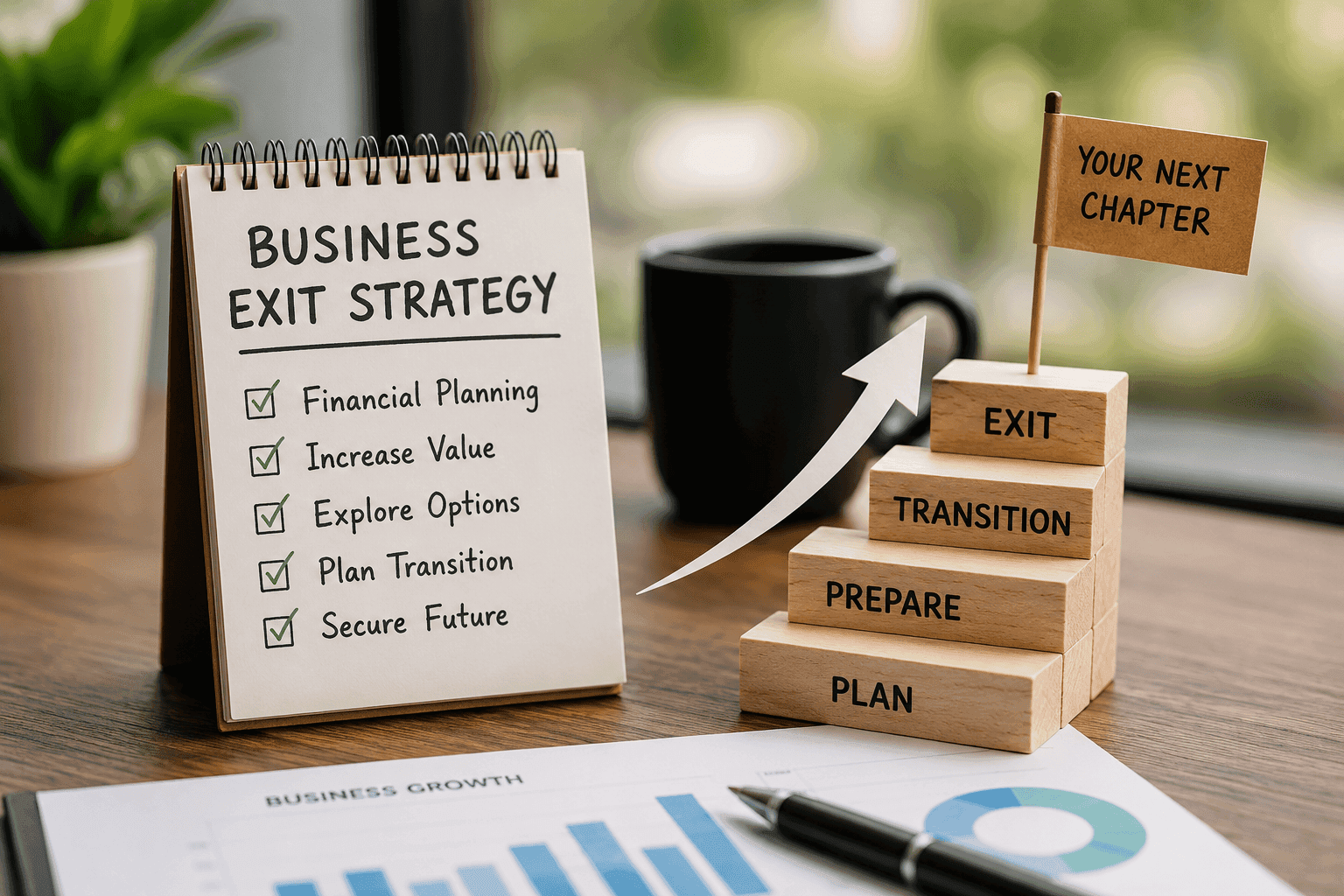
  • Business Exit Strategy: Why It’s Never Too Early to Start Planning

    Business Exit Strategy: Why It’s Never Too Early to Start Planning

    When you’re busy running a business, thinking about how you’ll eventually leave it probably isn’t at the top of your to-do list.

    There are customers to look after, staff to manage, sales to make and, of course, the day-to-day running of the business.

    But whether you’re thinking about retiring in a few years, selling your business, passing it on to a family member or simply want to keep your options open, having an exit strategy in place can make a huge difference.

    And the important thing to remember is that an exit strategy isn’t just something to think about when you’re ready to leave. The earlier you start planning, the more options you have.

    What is an exit strategy?

    An exit strategy is simply a plan for what you want to happen to your business when you decide it’s time to move on.

    There isn’t one right answer. Your exit might involve:

    • Selling the business to another company or individual
    • Passing the business on to a family member
    • Selling the business to your existing management team
    • Bringing in a business partner with a view to eventually stepping away
    • Closing the business and winding things up
    • Retiring and gradually reducing your involvement

    The right option will depend on your business, your personal circumstances and, importantly, what you want your life to look like after you leave.

    Why should you start planning early?

    One of the biggest mistakes business owners can make is leaving their exit planning until they actually want to sell.

    If you suddenly decide you want to retire in 12 months, you may find that there are things you could have done years earlier to make the business more attractive to a potential buyer.

    For example, a business may be heavily reliant on its owner. Perhaps you personally deal with most of the customers, make all the key decisions or are the only person who knows how certain processes work.

    That might work perfectly well while you’re running the business, but it can make the business much harder to sell.

    Planning ahead gives you time to make changes.

    What makes a business attractive to a buyer?

    Every business is different, but potential buyers will generally want to see a business that is well organised, profitable and has the potential to continue performing without the current owner being involved in every decision.

    Some of the things worth considering include:

    Reliable financial information

    Accurate and up-to-date accounts give you and a potential buyer a much clearer picture of how the business is performing.

    Strong and consistent profits

    Buyers will usually be interested in the underlying profitability of the business and whether those profits are sustainable.

    A good customer base

    A business that relies heavily on one or two customers can carry more risk than one with a broad and established customer base.

    Good systems and processes

    If everything is in the owner’s head, it can make a business difficult to hand over. Documenting processes and responsibilities can make a big difference.

    A strong team

    A capable team that can continue running the business without the owner being involved in every aspect can make the business more attractive to a buyer.

    Less reliance on you

    This can be one of the biggest challenges for owner-managed businesses. If the business can’t operate without you, it can be difficult for someone else to take it on.

    Don’t forget about tax

    Tax planning should be an important part of your exit strategy.

    Depending on how you plan to exit your business, there may be different tax considerations. The structure of your business, how you sell or transfer it and your personal circumstances can all affect the tax position.

    This is why it’s worth getting advice before you agree a sale or transfer.

    Good tax planning isn’t about finding a last-minute solution. It’s about understanding your options early enough to make informed decisions.

    What does your ideal exit look like?

    Before you start making plans, it’s worth thinking about what you actually want from your exit.

    Do you want to maximise the amount you receive from selling the business?

    Would you rather pass it on to your children?

    Do you want to stay involved for a few years after a sale?

    Or is your priority simply having a clean break and enough money to enjoy retirement?

    There isn’t a right or wrong answer. Your exit strategy should be built around your goals, not just what happens to be easiest for the business.

    Your business exit could be years away – and that’s okay

    You don’t need to have a detailed five or ten-year plan today.

    The important thing is to start thinking about it.

    Even if you’re not planning to leave your business for many years, regularly reviewing the value and performance of your business can help you identify areas that could be improved.

    It also means that if your plans change unexpectedly, you’re in a much stronger position.

    Start planning before you need to

    Your business may be one of your biggest personal assets, so it’s worth giving some thought to how you’ll eventually turn that asset into the next stage of your life.

    An exit strategy isn’t about planning to leave your business tomorrow.

    It’s about making sure you have choices when the time comes.

    At Housley-Knight & Tampin, we can help you look at the numbers, understand your options and start planning for the future of your business — whether your exit is five years away or something you’re already considering.

    The best time to start planning your exit is before you need to.

  • Business Expenses: What Can I Claim?

    Business Expenses: What Can I Claim?

    One of the questions we’re asked most often is, “What business expenses can I claim?”

    Understanding which costs are allowable can help reduce your tax bill and ensure you’re not paying more tax than you need to. At the same time, it’s important to remember that not every expense is tax deductible, so knowing the difference can save you problems further down the line.

    Here’s a guide to some of the most common business expenses.

    What is an allowable business expense?

    HM Revenue & Customs (HMRC) says that business expenses must be “wholly and exclusively” for the purpose of running your business.

    In simple terms, if the expense is incurred purely for your business, it’s likely to be allowable. If it’s for personal use, or a mixture of business and personal use, the rules can be a little more complicated.

    Common business expenses you can usually claim

    Office costs

    If you buy items that help you run your business, these are often allowable expenses. This could include:

    • Stationery
    • Printer ink and paper
    • Postage
    • Software subscriptions
    • Phone bills used for business
    • Internet costs (where used for business)

    Travel costs

    If you’re travelling for business purposes, you may be able to claim:

    • Fuel (business journeys only)
    • Train and bus fares
    • Taxi fares
    • Parking charges
    • Hotel accommodation
    • Meals when travelling overnight for work

    It’s worth remembering that commuting between your home and a permanent workplace isn’t usually an allowable business expense.

    Professional fees

    Many professional costs are tax deductible, including:

    • Accountancy fees
    • Legal fees (where allowable)
    • Business insurance
    • Professional memberships and subscriptions
    • Bank charges on your business account

    Marketing and advertising

    Promoting your business is generally an allowable expense, including:

    • Website design and hosting
    • Social media advertising
    • Printed flyers and business cards
    • Online advertising
    • Branding and promotional materials

    Equipment

    Items you purchase to use in your business may qualify for tax relief, such as:

    • Laptops and computers
    • Mobile phones
    • Office furniture
    • Tools and equipment
    • Machinery

    Depending on the item, the cost may be claimed through capital allowances rather than as a day-to-day expense.

    Staff costs

    If you employ people, you can usually claim expenses relating to:

    • Salaries and wages
    • Employer National Insurance contributions
    • Pension contributions
    • Staff training
    • Uniforms
    • Employee benefits (subject to specific tax rules)

    What about working from home?

    If you work from home, you may be able to claim a proportion of certain household costs, such as:

    • Electricity and gas
    • Broadband
    • Council Tax (in some circumstances)
    • Mortgage interest or rent (depending on your business structure and the rules that apply)

    The amount you can claim depends on how you use your home for business, so it’s important to calculate this correctly.

    What can’t I claim?

    Some costs aren’t allowable for tax purposes, even if they feel business-related.

    Examples include:

    • Everyday clothing (unless it’s protective clothing or a uniform)
    • Personal expenses
    • Fines and penalties
    • Client entertainment
    • Your own personal meals during a normal working day

    These are common areas where mistakes can happen, so it’s always worth checking if you’re unsure.

    Keep good records

    Whatever expenses you claim, good record keeping is essential.

    Keeping receipts, invoices and digital records not only makes preparing your accounts much easier but also means you’ll have the evidence you need if HMRC ever asks to see it.

    With Making Tax Digital becoming more widespread, keeping accurate digital records will become increasingly important for many businesses.

    How can Housley-Knight & Tampin help?

    Knowing what you can and can’t claim isn’t always straightforward, and every business is different.

    At Housley-Knight & Tampin, we work with business owners throughout the year to make sure they’re claiming everything they’re are entitled to while staying compliant with HMRC’s rules. We can also help you keep on top of your bookkeeping, so your records are always accurate and up to date.

    If you’re unsure whether an expense is allowable, or you’d like advice tailored to your business, we’re always happy to help.

    Growth Beyond Compliance means giving you the confidence that your finances are in good order—not just at year end, but all year round.

  • Making Tax Digital (MTD): What It Is, Who’s Affected and What’s Changing

    Making Tax Digital (MTD): What It Is, Who’s Affected and What’s Changing

    If you’ve heard the term Making Tax Digital (MTD) but aren’t quite sure what it means, you’re not alone.

    Making Tax Digital is one of the biggest changes to the UK tax system in recent years, and while it has already been introduced for some taxes, further changes are on the way that will affect many self-employed individuals and landlords.

    Here’s what you need to know.

    What is Making Tax Digital?

    Making Tax Digital is a government initiative from HM Revenue & Customs (HMRC) designed to make the UK tax system more efficient, effective and easier for taxpayers to manage.

    Rather than keeping paper records or spreadsheets and submitting one annual tax return, MTD requires businesses and individuals to:

    • Keep digital financial records.
    • Use compatible software to maintain those records.
    • Submit updates to HMRC electronically.

    The aim is to reduce errors, improve accuracy and encourage businesses to keep their records up to date throughout the year.

    Who is already affected?

    VAT-registered businesses

    Making Tax Digital for VAT has been in place for several years and now applies to almost all VAT-registered businesses. These businesses must keep digital VAT records and submit VAT returns using compatible software.

    What’s changing?

    The next phase of Making Tax Digital is for Income Tax Self Assessment (ITSA).

    This will affect many:

    • Sole traders
    • Self-employed individuals
    • Landlords with rental income

    The changes will be introduced in stages.

    From April 2026

    If your combined income from self-employment and/or property is more than £50,000, you’ll need to follow the new MTD rules.

    From April 2027

    The threshold will reduce to more than £30,000.

    From April 2028

    The government has announced that the threshold will reduce again to more than £20,000, bringing many more taxpayers into the MTD regime.

    What will you need to do?

    If you’re affected by MTD for Income Tax, you’ll no longer simply complete one Self Assessment tax return each year.

    Instead, you’ll need to:

    • Keep digital accounting records.
    • Use HMRC-compatible software.
    • Submit quarterly updates to HMRC.
    • Submit a final declaration at the end of the tax year to confirm your income and claim any reliefs or allowances.

    Although this means more frequent reporting, it also gives you a better picture of your business throughout the year.

    What are the benefits?

    While many people see MTD as an additional administrative task, there are some real advantages to keeping your records up to date.

    Regular bookkeeping can help you:

    • Understand how your business is performing.
    • Estimate your tax liability throughout the year.
    • Improve cash flow planning.
    • Reduce errors caused by leaving everything until the last minute.
    • Make better-informed business decisions.

    Instead of receiving a surprise tax bill at the end of the year, you’ll have a clearer understanding of what to expect.

    How can Housley-Knight & Tampin help?

    Preparing for Making Tax Digital doesn’t have to be stressful.

    At Housley-Knight & Tampin, we can help you choose the right software, keep your bookkeeping up to date and ensure you’re ready for the new reporting requirements.

    Whether you’re already affected or want to get ahead before the rules apply to you, we’re here to guide you through the changes and make sure you’re compliant every step of the way.

    Need advice?

    If you’re unsure whether Making Tax Digital applies to you or you’d like to discuss how to prepare, get in touch with our team today. We’ll help you understand what the changes mean for your business and make the transition as straightforward as possible.

    Growth Beyond Compliance isn’t just our tagline—it’s how we support our clients every day.

  • VAT for small businesses: registration, schemes and avoiding the common traps

    VAT for small businesses: registration, schemes and avoiding the common traps

    Insights · VAT & compliance

    VAT for small businesses: registration, schemes and avoiding the common traps.

    VAT is the UK’s most invasive tax for small businesses. It affects pricing, cashflow, record-keeping and software — and unlike Corporation Tax, it is a live, quarterly obligation with little room for error.
    Housley-Knight & Tampin | May 2026 | 10 min read
    30
    days — the window to register once the VAT threshold is breached in any rolling 12-month period
    £90k
    current VAT registration threshold — a rolling test, not a tax-year test
    MTD
    Making Tax Digital for VAT — mandatory for all VAT-registered businesses regardless of turnover
    VAT registration becomes mandatory when your taxable turnover in any rolling 12-month period exceeds the threshold. This is a rolling test — not a tax-year test — and it is one of the most misunderstood rules in UK tax.
    Housley-Knight & Tampin
    01
    Should you register for VAT?

    VAT registration becomes mandatory when your taxable turnover in any rolling 12-month period exceeds the registration threshold (currently £90,000), or when you reasonably expect to exceed it in the next 30 days.

    You must register within 30 days of the end of the month in which the threshold is breached. Failure to register on time exposes you to backdated VAT — payable out of your own margin, because you cannot generally retrospectively charge customers — plus penalties.

    Practical implications
    • Monitor your rolling 12-month turnover monthly, not annually
    • Include zero-rated supplies in the threshold calculation
    • Exclude exempt supplies and the sale of capital assets
    • Account for one-off spikes in income — they count
    02
    Voluntary registration — when it pays.

    Registering before you hit the threshold is sometimes the right call. The case for voluntary registration is strongest where:

    B2B customers
    VAT-registered customers can reclaim the VAT you charge — so registration costs them nothing and you reclaim your input VAT.
    Significant setup costs
    Input VAT on setup costs, stock or equipment can be reclaimed from registration — and under transitional rules, for a period before registration.
    Credibility and tendering
    Some tenders and supplier relationships expect VAT registration as a marker of scale and commercial readiness.
    When it is not beneficial
    Rarely beneficial for businesses selling primarily to consumers or non-VAT-registered customers — every £1 of sale becomes roughly 83p, or you absorb the VAT out of margin.
    Consumer-facing businesses should model both scenarios first
    03
    The main VAT schemes.

    HMRC operates several schemes designed to simplify VAT for smaller businesses. Choosing the right one affects both cashflow and admin burden.

    Standard VAT accounting
    VAT accounted for on the invoice date. The default — works well where customers pay promptly.
    Cash accounting scheme
    VAT accounted for when payment is actually received or made. Useful where customers pay slowly or bad debts are a risk. Eligibility is capped by turnover.
    Flat Rate Scheme (FRS)
    You charge VAT at the standard rate but pay HMRC a fixed percentage of VAT-inclusive turnover. Input VAT is generally not reclaimable. The limited cost trader rules apply a 16.5% rate to businesses with low goods spend — removing most of the benefit for service businesses.
    Model both options before opting in — FRS is beneficial only in a narrow set of cases
    Annual accounting scheme
    One VAT return per year with interim payments. Reduces admin but offers no cashflow advantage and isn’t suitable where input VAT fluctuates significantly.
    04
    Making Tax Digital for VAT.

    MTD for VAT applies to all VAT-registered businesses, regardless of turnover. The requirements are:

    • Keep digital VAT records
    • Submit returns using MTD-compatible software
    • Maintain digital links between systems — copying and pasting between spreadsheets breaks the digital link requirement
    MTD penalty points apply to late submissions and late payments. Points accumulate — once a threshold is reached, financial penalties begin and persist until a clean period of compliance is achieved. Practical compliance requires proper accounting software (Xero, QuickBooks, Sage, FreeAgent) — not spreadsheets emailed to HMRC.
    05
    Input VAT — what you can and can’t reclaim.

    General rule: input VAT is reclaimable on goods and services used for business purposes. Common exclusions and restrictions:

    • Business entertainment — generally blocked for UK customers; partial recovery for overseas customers or staff entertainment within limits
    • Company cars — input VAT is generally blocked unless the car is used exclusively for business (rare). Commercial vehicles are usually recoverable
    • Fuel — either reclaim all input VAT and apply the fuel scale charge, or reclaim only the business proportion
    • Mixed-use purchases — require apportionment between business and private use
    Keep VAT invoices — not just receipts. Without a valid VAT invoice, recovery is generally not permitted regardless of the business purpose of the purchase.
    06
    Exports, imports and digital services.

    Since Brexit, the VAT treatment of cross-border trade has become materially more complex for UK SMEs.

    Goods exported from GB
    Zero-rated for UK VAT purposes, but require customs declarations and evidence of export to support the zero-rating.
    Goods imported into GB
    Import VAT applies, usually recovered via Postponed VAT Accounting (PVA) — which avoids the cashflow drag of paying import VAT at the border.
    Services to overseas customers
    Treatment depends on place-of-supply rules, which differ significantly for B2B and B2C customers and vary by service category.
    Digital services to EU consumers
    Generally fall under the EU One Stop Shop (OSS) or Non-Union OSS regime — separate registration and reporting obligations apply.
    Getting cross-border VAT wrong creates significant exposure. If you trade with EU customers or suppliers regularly, specialist VAT advice is not optional.
    07
    Common VAT errors.

    These are the mistakes we see most frequently — each carries real exposure:

    ✗Treating exempt and zero-rated supplies interchangeably — they are not the same and have very different VAT consequences
    ✗Reclaiming input VAT without a valid VAT invoice — receipts are not sufficient
    ✗Missing the registration threshold because turnover is reviewed annually rather than on a rolling monthly basis
    ✗Reclaiming VAT on entertainment or other blocked items
    ✗Failing to account for VAT on deemed supplies — assets taken into personal use, removal of stock on deregistration
    ✗Forgetting about the Capital Goods Scheme for properties and high-value equipment
    ✗Incorrect VAT on deposits and stage payments
    ✗Not applying the Domestic Reverse Charge (DRC) on construction services or the reverse charge on cross-border B2B services
    Not sure if your VAT setup is optimal?
    Continues below — or book a free 30-minute call.
    08
    VAT health check.

    Use this checklist to confirm your VAT position is in good shape.

    Your VAT health check
    ✓
    Rolling 12-month turnover reviewed monthly — not annually
    ✓
    Correct VAT scheme selected for your business model
    ✓
    MTD-compatible software in use with digital links maintained throughout
    ✓
    Input VAT supported by valid VAT invoices, not just receipts
    ✓
    Blocked input VAT — entertainment, cars — correctly identified and excluded
    ✓
    Postponed VAT Accounting set up if importing goods from overseas
    ✓
    Cross-border services assessed for place-of-supply rules
    ✓
    Domestic Reverse Charge applied to construction services where relevant
    ✓
    VAT return reviewed and reconciled before submission each quarter
    If you do one thing
    Review your rolling 12-month turnover every month — not every year.
    Missing the registration threshold is the single most expensive VAT error we see. The VAT becomes payable from the date registration should have happened, regardless of whether you charged it to customers. At Housley-Knight & Tampin we handle VAT registration, scheme selection, quarterly returns and cross-border advisory for SMEs across the North East. If you are unsure whether your current setup is optimal, a one-off review is often the most cost-effective starting point.
    Frequently asked questions.
    How is the VAT registration threshold calculated?
    On a rolling 12-month basis, including all taxable (standard-rated and zero-rated) supplies. Exempt supplies and sales of capital assets are excluded. If the rolling total exceeds the current threshold of £90,000 at the end of any month, registration is required within 30 days of the following month end.
    Can I deregister for VAT if my turnover falls?
    Yes, voluntary deregistration is permitted once turnover in the next 12 months is reasonably expected to be below the deregistration threshold (lower than the registration threshold). You may need to account for VAT on business assets held at deregistration if their value exceeds a set threshold.
    Is the Flat Rate Scheme still worth it?
    For most service businesses, the Limited Cost Trader rules have significantly reduced the benefit — applying a 16.5% flat rate that effectively removes any saving. Model both Standard and FRS based on your actual costs before deciding. For some sectors with higher goods spend, FRS can still produce a small saving, but it is a narrower set of cases than it was before the limited cost trader rules were introduced.
    Do I charge VAT to overseas customers?
    It depends on whether the supply is goods or services, the customer’s status (B2B or B2C) and the place of supply. Goods exported outside the UK are typically zero-rated with evidence of export. Services are governed by place-of-supply rules that differ substantially by category — specialist advice is recommended if you regularly trade across borders.
    What are the penalties for late VAT submissions?
    Under the current points-based regime, each late submission earns a penalty point. Once the threshold is reached — based on submission frequency — a fixed penalty is issued, with further penalties for each subsequent late submission until a period of compliance resets the points. Separate penalties apply for late payment of VAT.
    Not sure if your VAT setup is optimal?
    Book a free 30-minute call — no obligation, no hard sell.
  • How to Save Tax as a Small Business Owner (UK)

    How to Save Tax as a Small Business Owner (UK)

    Insights · Tax planning

    How to save tax as a small business owner.

    Tax should be planned — not feared. Effective tax planning is about structure, timing and informed decision-making. Not gimmicks or aggressive schemes. Keeping more of what you earn while remaining fully compliant.
    Housley-Knight & Tampin | May 2026 | 10 min read
    8
    planning areas covered — from income extraction to group structures
    0%
    tax on employer pension contributions at contribution stage — one of the most efficient planning tools available
    Pre
    year-end tax review — the single most effective habit for small business tax planning
    Tax planning is not about gimmicks or aggressive schemes. It is about structure, timing and informed decision-making — keeping more of what you earn while remaining fully compliant.
    Housley-Knight & Tampin
    01
    Extracting income tax efficiently.

    How you take money from your company has a major impact on your overall tax bill. Most owner-managed companies use a combination of salary and dividends — but the optimal structure depends on several factors.

    Salary vs dividends
    Salary
    Reduces corporation tax but may trigger employer National Insurance. Provides a pensionable earnings base and supports mortgage applications.
    Dividends
    Paid from post-tax profits and taxed at dividend rates personally — generally more tax-efficient above the NI threshold, but only available where profits exist.

    The optimal balance depends on personal tax bands, Employment Allowance availability, student loan position, Child Benefit thresholds and overall household income. Income extraction should be aligned with household planning — not just company profit.

    Using a spouse for income efficiency

    Where one spouse has unused allowances or remains within the basic rate band, spreading income can reduce the total tax paid as a household. This may include paying a commercial salary for genuine work, issuing shares and paying dividends, and utilising both personal allowances and lower tax bands.

    The work must be genuine. Pay must be commercially reasonable. Share structures must comply with anti-avoidance rules. Documentation is essential. When implemented correctly, income splitting is one of the most effective long-term strategies available to small business owners.
    02
    Pension contributions — highly efficient planning.

    Employer pension contributions are one of the most tax-efficient extraction tools available to small business owners.

    • Deductible for corporation tax (subject to commercial justification)
    • No employer National Insurance on contributions
    • No personal income tax at the contribution stage
    This moves profit from company to pension with minimal immediate tax cost — making employer pension contributions one of the most powerful planning tools available at any profit level.

    Pension strategy should not operate in isolation. At Housley-Knight & Tampin, we coordinate with regulated financial advisers to ensure tax efficiency aligns with investment strategy and longer-term retirement planning.

    03
    Trivial benefits and allowable perks.

    Small allowances can enhance tax efficiency when structured correctly. Trivial benefits allow directors and employees to receive small non-cash benefits within statutory limits without triggering income tax or NIC, provided conditions are met.

    Other commonly overlooked areas include:

    • Annual staff events within exemption limits
    • Mobile phone provision
    • Home office claims
    • Mileage allowances at HMRC approved rates

    Individually these are modest, but collectively they form part of a structured and efficient remuneration plan.

    04
    Reducing corporation tax.

    Corporation tax is calculated on profit. Planning focuses on legitimate deductions and timing — not avoidance.

    Timing of income and expenditure
    • Bring forward allowable costs where commercially sensible
    • Review bonus and dividend timing in relation to the year-end
    • Ensure year-end adjustments are accurate and complete

    Managing timing within commercial reality can smooth tax exposure across years.

    Business investment

    When a business invests in assets or infrastructure it genuinely requires, tax relief is often available. The principle remains: commercial decision first, tax efficiency second. Proper planning ensures all legitimate deductions are claimed while maintaining sound business judgement.

    05
    VAT planning.

    VAT planning directly affects cashflow. Consider whether the most appropriate VAT scheme is being used, the timing of VAT registration and the impact of VAT payments on working capital.

    VAT may not change overall profit, but it can significantly influence liquidity and stability — particularly for businesses with high levels of B2B or capital expenditure activity.
    06
    Loss relief.

    Tax planning applies in both strong and weaker years. Where losses arise, they may be carried forward, in some cases carried back, or offset against other income depending on structure and the type of loss.

    Managing losses correctly can reduce future tax exposure and support business recovery — and the rules differ depending on whether you are a sole trader, partnership or limited company.

    07
    Holding company and group structures.

    As businesses grow and begin retaining profits, structural planning becomes more relevant. A holding company is not simply about tax — it is about risk control, asset protection and flexibility.

    Profit retention
    Retain profits at corporation tax rates in a holding company rather than extracting everything personally at higher income tax rates.
    Risk ring-fencing
    In sectors like construction or development, individual projects can be placed into SPVs to isolate risk, liabilities and disputes from the core trading company.
    Asset protection
    Hold commercial premises, rental property or surplus cash separately from trading operations — protecting assets from operational exposure.
    Future sale readiness
    Group structures can prepare a business for future growth investment or eventual sale — providing structural clarity for buyers and advisers.
    HMRC clearance considerations

    Creating a holding company does not automatically require HMRC clearance. However, certain reorganisations — particularly inserting a holding company via a share-for-share exchange — often justify applying for advance clearance. Clearance provides confirmation that anti-avoidance provisions will not deny the intended tax treatment. Without it, HMRC may challenge the tax outcome, potentially creating unexpected charges.

    Group structures introduce additional administration and must be commercially justified. They are most suitable where profits are being retained and risk exposure is increasing. At Housley-Knight & Tampin, we assess structural suitability carefully before recommending any reorganisation.
    08
    Compliance risk and HMRC.

    HMRC’s data capability has increased significantly. Modern systems cross-reference bank data, online platforms and third-party submissions. Effective tax saving must be structured, documented and commercially justified. Poorly supported arrangements increase exposure.

    Planning reduces risk. Aggressive shortcuts increase it.
    Housley-Knight & Tampin
    If you do one thing
    Schedule a structured pre-year-end tax review each year.
    Most tax savings are lost through lack of planning rather than lack of opportunity. Once the year-end has passed, many decisions cannot be reversed. A structured review — even a short one — opens the window for timing, extraction and allowance decisions before it closes. If you want a coordinated tax strategy aligned with your wider financial goals, we can design that with you.
    Frequently asked questions.
    What is the most tax-efficient way to pay myself from my company?
    A combination of salary and dividends is commonly used. The optimal structure depends on corporation tax rates, dividend tax bands, National Insurance thresholds and overall household income. The right answer varies by individual — a pre-year-end review with your accountant is the most reliable way to identify it.
    Can I use my spouse to reduce our tax bill?
    Yes, where structured correctly. Paying a spouse for genuine work or issuing shares for dividend planning can utilise lower tax bands and personal allowances. The arrangement must be commercially justified, the work must be genuine, pay must be at a commercial rate and documentation is essential. Anti-avoidance rules apply — this is not a blanket strategy and should be reviewed individually.
    Do small businesses really need holding companies?
    Not always. Holding structures are typically appropriate where profits are being retained, projects carry increased risk or assets such as property need separating from trading activity. Suitability depends on growth stage, objectives and whether the structure can be commercially justified. The administration involved means it is not the right choice for every business.
    Want a structured pre-year-end tax review?
    Book a free 30-minute call — no obligation, no hard sell.
  • Payroll Compliance and Risk Control for UK SMEs

    Payroll Compliance and Risk Control for UK SMEs

    Insights · Payroll & compliance

    Payroll compliance and risk control for UK SMEs.

    Winning work is only part of running a business. Paying people correctly, on time and in compliance with HMRC is a structural obligation — not an administrative task.
    Housley-Knight & Tampin | May 2026 | 8 min read
    RTI
    Full Payment Submissions must reach HMRC on or before every payment date
    19th
    of the following month for cheque/postal payments · 22nd for electronic payments
    3yr
    re-enrolment cycle — auto-enrolment duties repeat every three years
    Is your remuneration structure controlled, compliant and commercially efficient — or exposed?
    Housley-Knight & Tampin
    Payroll is tax compliance, not just payment processing.

    Payroll is regulated tax reporting, pension compliance and cashflow management — executed every single month. Operating payroll correctly requires:

    • PAYE registration with HMRC
    • Submitting Full Payment Submissions (FPS) on or before each payment date
    • Filing Employer Payment Summaries (EPS) where required
    • Correct calculation of PAYE, National Insurance and student loans
    • Operating workplace pensions under auto-enrolment legislation
    • Managing statutory payments — SSP, SMP, SPP
    • Monthly PAYE control account reconciliation
    Late RTI submissions trigger automatic penalties. Incorrect pension assessments can lead to enforcement from The Pensions Regulator. NI category errors and student loan misallocations require retrospective corrections.

    Payroll errors compound quietly.

    Director payroll — where efficiency is won or lost.

    Many SME directors underestimate the structural impact of payroll on their overall remuneration position. Director remuneration often involves a combination of:

    Tax-efficient salary
    Set at a threshold that maximises NI and income tax efficiency without triggering unnecessary PAYE liability.
    Dividends
    Drawn from post-tax profits — more tax-efficient than salary above the threshold, but only available when profits exist.
    Employer pension contributions
    Paid direct from the company — corporation tax deductible and not subject to NI on either side.
    Benefits in kind
    Reportable on P11D — taxable on the individual and subject to Class 1A NIC from the employer.
    Director NI calculations differ from standard employees — annual basis versus cumulative methods. Incorrect structuring can reduce tax efficiency or create reporting inconsistencies. Payroll is not separate from remuneration strategy. It implements it.
    Workplace pensions — technical and time-sensitive.

    Auto-enrolment duties apply every pay run. This is one of the most frequent technical weak points within SMEs.

    Each pay period you must:

    • Assess worker eligibility
    • Automatically enrol qualifying staff
    • Deduct correct contributions
    • Submit data to pension providers
    • Pay contributions by statutory deadlines
    • Re-enrol eligible staff every three years
    The distinction between qualifying earnings, basic pay and total pay affects both employer cost and compliance position. Salary sacrifice arrangements further alter NI and tax treatment.
    Payroll as a cashflow driver.

    Payroll creates predictable cash events that must be forecast — not just processed. The full cost extends well beyond net wages:

    Net wages
    Paid on your chosen pay date — the most visible payroll cost but not the only one.
    PAYE and NIC liabilities
    Due by the 19th (cheque) or 22nd (electronic) of the following month — a significant deferred cash outflow often under-forecasted.
    Pension contributions
    Must be paid within strict deadlines — failure triggers enforcement from The Pensions Regulator.
    Apprenticeship Levy
    Applicable where annual payroll bill exceeds £3 million — a further monthly outflow to forecast.
    A rolling 3-month forecast should model full payroll cost — not just net pay. Without this, payroll becomes the largest recurring unmanaged cash commitment in the business.
    The real cost of in-house payroll.

    The visible costs of running payroll in-house — software and processing time — are only part of the picture.

    Visible costs
    Software subscription and monthly processing time — easily identified and budgeted.
    Less visible costs
    Corrections, resubmissions, P11Ds, Class 1A NIC, pension reconciliation, HMRC queries, regulatory updates and penalty exposure.

    As headcount grows, statutory payments arise or benefits are introduced, payroll becomes a compliance control function — not an administrative one.

    For many SMEs, outsourcing payroll is not about convenience — it is about structured risk management.

    At Housley-Knight & Tampin, we work alongside our specialist professional payroll provider to ensure technical accuracy, pension compliance, clean integration into your accounting system and clear reporting into management accounts. Payroll should sit within your financial framework — not operate independently of it.

    The compliance environment is data-led.

    HMRC operates fully digital RTI systems. Payroll data, student loans and benefit reporting are cross-referenced automatically.

    Discrepancies surface quickly. Strong internal processes reduce exposure and strengthen credibility with lenders and stakeholders.
    If you do one thing
    Confirm that your payroll is structured, compliant and visible in your accounts.
    Check that your payroll ticks all five boxes:
    • Structurally aligned with your remuneration strategy
    • Reconciled monthly to your ledger
    • Pension compliant
    • Properly documented
    • Future-proofed for headcount growth
    Frequently asked questions.
    Can I pay myself dividends only and avoid payroll entirely?
    If no salary is paid, PAYE may not be required. However, many directors operate tax-efficient salary thresholds, make pension contributions or claim Employment Allowance — all of which require PAYE registration and RTI submissions. Dividend-only approaches are often misunderstood in practice and should be reviewed within your wider remuneration structure.
    What happens if I submit payroll late?
    Late FPS submissions to HMRC can trigger automatic monthly penalties. Continued non-compliance may increase scrutiny and correction workload. Accuracy and timing are equally important.
    How do I know if my pension setup is compliant?
    You must assess eligibility each pay run, use a compliant contribution basis, submit accurate data to your provider and meet payment deadlines. Failure can result in enforcement from The Pensions Regulator. Many issues arise from incorrect pensionable pay definitions or missed re-enrolment cycles.
    Does payroll affect my company’s cashflow planning?
    Yes. Payroll liabilities extend beyond wages. PAYE/NIC and pension contributions create structured outflows in the following month. These must be forecast alongside wages to prevent unnecessary cash pressure — particularly for growing businesses adding headcount.
    When should payroll be integrated into management reporting?
    From the outset. Payroll impacts gross margin (where labour is direct), overhead structure, PAYE creditors, director loan accounts and pension liabilities. If payroll is not reconciled and visible in management accounts, financial clarity is reduced across the board.
    Need a payroll health check or a compliance review?
    Book a free 30-minute call — no obligation, no hard sell.
  • Cashflow, Compliance and Profit Clarity for Small UK Businesses

    Cashflow, Compliance and Profit Clarity for Small UK Businesses

    Insights · Business finance

    Cashflow, compliance and profit clarity for small UK businesses.

    Running an SME is not just about winning work. It is about controlling cash, staying compliant and understanding whether your effort is actually producing profit.
    Housley-Knight & Tampin | May 2026 | 9 min read
    27
    days median cash buffer for small businesses — JP Morgan Chase, 597,000 businesses
    82%
    of failed businesses cited cashflow as a contributing factor
    3mo
    rolling forecast — the minimum cashflow visibility every SME needs
    Revenue feels good. Cash keeps you alive.
    Housley-Knight & Tampin
    Cashflow.

    Cashflow is the single biggest pressure point for small businesses. You can show profit in your accounts and still struggle if the money is not in the bank when bills fall due.

    Median small businesses hold enough cash to sustain only 27 days without further inflows.
    JP Morgan Chase — research across 597,000 small businesses

    A widely referenced figure from Hagen states that of the small businesses which fail, cashflow management was a contributing factor in 82% of cases. Put simply — cash is king, and you need to understand it as a small business owner.

    Rolling 3-month cashflow forecast

    Maintain a rolling 3-month forecast, updated at least monthly and ideally weekly. Focus on five core areas:

    • Income — invoices raised with realistic payment expectations based on actual customer behaviour, assuming some delays
    • Direct costs — materials, subcontractors and job-specific purchases that often require payment before you receive funds
    • Direct debits & standing orders — subscriptions, finance agreements and recurring services that quietly accumulate
    • Recurring overheads — rent, insurance, utilities and software licences
    • Payroll — typically your largest and least flexible outgoing

    Each period should show opening balance, expected receipts, expected payments and closing balance. The lowest projected bank position is often more important than the final month figure.

    Cashflow discipline

    A forecast without discipline changes nothing.

    • Review aged debt weekly
    • Operate structured credit control with clear terms and staged follow-ups
    • Explore escalation options where customers breach agreed terms
    • Consider issuing notice of assignment or factoring of debt as part of formal escalation where appropriate
    • Act decisively with bad faith customers where necessary and commercially responsible
    • Review recurring expenditure regularly — small leaks compound
    • Build a reserve equal to at least three months of operating costs
    • Keep business and personal finances separate
    When personal and business spending are mixed, visibility is reduced. Personal expenditure is often reallocated to a Director’s Loan Account (DLA), which can create tax implications and unexpected liabilities.
    Leveraging finance — VIPBAR.

    Finance should support strategy, not compensate for weak margins. Be careful not to leverage your business when better and cleaner options exist — that said, the following options may be useful for a scaling business.

    OptionWhat it is
    Venture Capital *High-risk, high-return investment in scalable businesses, typically at earlier stages of growth
    Invoice & Asset FinanceUnlocking cash tied up in invoices or spreading asset costs — invoice discounting, factoring, hire purchase, contract hire
    Private Equity *Privately backed capital in exchange for an equity stake, usually with active strategic involvement
    BanksTraditional lending — overdrafts, term loans and structured facilities. Most likely option for micro businesses
    Angel InvestorsIndividuals investing their own capital alongside experience and networks
    Regional Funds *Government or development-backed funding to stimulate regional economic growth — accessible to small and medium businesses

    * Venture Capital, Private Equity and Regional Funding typically involve extensive financial and legal due diligence, which can be lengthy and costly.

    At Housley-Knight & Tampin, we have established connections across many of these funding channels and can advise on suitable options where external finance forms part of your wider growth strategy.

    Compliance.

    Compliance should be structured and predictable — not reactive and stressful. For most UK SMEs this includes:

    • Year-end accounts and related tax filings (CT600)
    • Confirmation statements and other Companies House filings
    • VAT compliance under Making Tax Digital
    • MTD for Self Assessment
    • Payroll operation — FPS and EPS submissions, PAYE, NICs and pensions
    • Self Assessment for directors and individuals
    HMRC’s Connect software cross-references data from banks, online platforms and third parties. Greater digital integration means discrepancies are identified more quickly and more frequently.
    Effective compliance management
    • Internal deadlines ahead of statutory deadlines
    • Clear segregation between bookkeeping, review and submission
    • Regular VAT and payroll reconciliations
    • Documented processes for director remuneration and drawings
    • Annual tax planning discussions rather than purely retrospective filings

    If compliance feels chaotic, the issue is normally process rather than complexity.

    Financial clarity.

    Many owners track revenue because it is visible and easy to celebrate. But revenue alone does not determine whether your business model works.

    The revenue spiral
    When revenue slows, lower-margin work is accepted. Overheads expand. Cash becomes squeezed. More sales are pursued to relieve pressure. Activity increases. Margin weakens. Stress rises. Growth does not fix structural weakness.
    Understanding your costs
    Direct costs
    Costs directly linked to delivering a product or service. If the job stops, the cost stops.
    Materials, subcontractors, job-specific labour
    Indirect costs (overheads)
    Costs that support the business generally — not directly traced to specific revenue or activity.
    Rent, admin salaries, software, insurance
    Fixed costs
    Costs that stay broadly the same regardless of activity levels.
    Rent, insurance, salaried administration
    Variable costs
    Costs that increase and decrease in line with sales activity.
    Materials, hourly labour, commission

    If you do not separate your costs, financial decisions are based on instinct rather than evidence. You avoid chasing more sales when the real problem lies in fixed cost pressure or weak margin.

    Frequently asked questions.
    Why do profitable small businesses still run out of cash?
    Profit is an accounting measure. Cashflow reflects timing. If customers pay late, stock or project costs are paid upfront, or overheads grow too quickly, a business can show net profit but still experience cash shortages. A rolling cashflow forecast highlights these timing gaps early.
    How do I calculate my business break-even point?
    Your break-even point is the level of revenue required to cover fixed costs before making profit. First identify your fixed monthly costs. Then determine how much gross profit (sales minus direct costs) you make on each pound of revenue. Divide your fixed costs by that gross profit percentage to estimate the revenue required to break even.
    What is the difference between gross profit and net profit?
    Gross profit is revenue minus direct costs — it shows how efficiently you deliver your product or service. Net profit is what remains after deducting overheads, finance costs and taxes. Strong revenue with weak gross profit margins often signals pricing or cost control issues.
    If you do one thing
    Implement a rolling 3-month cashflow forecast and review it weekly.
    Most structural weaknesses show up there first. If you want this integrated properly into your bookkeeping and reporting systems, we can structure and implement it with you. Strong SMEs protect cash, maintain disciplined compliance and understand their cost structure. Optimism builds ambition. Financial clarity protects longevity.
    Want a cashflow template or a free business health check?
    Book a free 30-minute call — no obligation, no hard sell.