

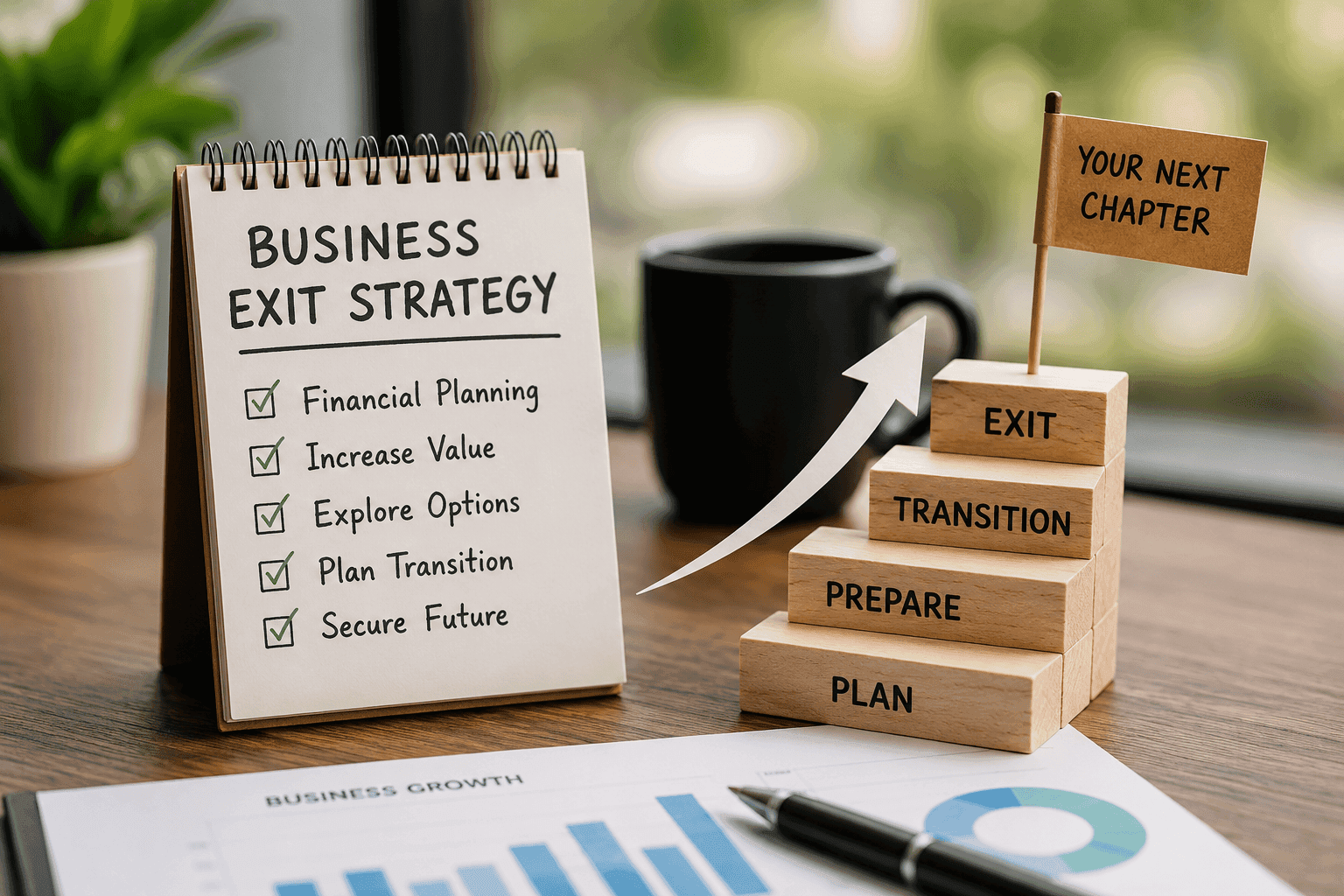
When you’re busy running a business, thinking about how you’ll eventually leave it probably isn’t at the top of your to-do list.
There are customers to look after, staff to manage, sales to make and, of course, the day-to-day running of the business.
But whether you’re thinking about retiring in a few years, selling your business, passing it on to a family member or simply want to keep your options open, having an exit strategy in place can make a huge difference.
And the important thing to remember is that an exit strategy isn’t just something to think about when you’re ready to leave. The earlier you start planning, the more options you have.
What is an exit strategy?
An exit strategy is simply a plan for what you want to happen to your business when you decide it’s time to move on.
There isn’t one right answer. Your exit might involve:
- Selling the business to another company or individual
- Passing the business on to a family member
- Selling the business to your existing management team
- Bringing in a business partner with a view to eventually stepping away
- Closing the business and winding things up
- Retiring and gradually reducing your involvement
The right option will depend on your business, your personal circumstances and, importantly, what you want your life to look like after you leave.
Why should you start planning early?
One of the biggest mistakes business owners can make is leaving their exit planning until they actually want to sell.
If you suddenly decide you want to retire in 12 months, you may find that there are things you could have done years earlier to make the business more attractive to a potential buyer.
For example, a business may be heavily reliant on its owner. Perhaps you personally deal with most of the customers, make all the key decisions or are the only person who knows how certain processes work.
That might work perfectly well while you’re running the business, but it can make the business much harder to sell.
Planning ahead gives you time to make changes.
What makes a business attractive to a buyer?
Every business is different, but potential buyers will generally want to see a business that is well organised, profitable and has the potential to continue performing without the current owner being involved in every decision.
Some of the things worth considering include:
Reliable financial information
Accurate and up-to-date accounts give you and a potential buyer a much clearer picture of how the business is performing.
Strong and consistent profits
Buyers will usually be interested in the underlying profitability of the business and whether those profits are sustainable.
A good customer base
A business that relies heavily on one or two customers can carry more risk than one with a broad and established customer base.
Good systems and processes
If everything is in the owner’s head, it can make a business difficult to hand over. Documenting processes and responsibilities can make a big difference.
A strong team
A capable team that can continue running the business without the owner being involved in every aspect can make the business more attractive to a buyer.
Less reliance on you
This can be one of the biggest challenges for owner-managed businesses. If the business can’t operate without you, it can be difficult for someone else to take it on.
Don’t forget about tax
Tax planning should be an important part of your exit strategy.
Depending on how you plan to exit your business, there may be different tax considerations. The structure of your business, how you sell or transfer it and your personal circumstances can all affect the tax position.
This is why it’s worth getting advice before you agree a sale or transfer.
Good tax planning isn’t about finding a last-minute solution. It’s about understanding your options early enough to make informed decisions.
What does your ideal exit look like?
Before you start making plans, it’s worth thinking about what you actually want from your exit.
Do you want to maximise the amount you receive from selling the business?
Would you rather pass it on to your children?
Do you want to stay involved for a few years after a sale?
Or is your priority simply having a clean break and enough money to enjoy retirement?
There isn’t a right or wrong answer. Your exit strategy should be built around your goals, not just what happens to be easiest for the business.
Your business exit could be years away – and that’s okay
You don’t need to have a detailed five or ten-year plan today.
The important thing is to start thinking about it.
Even if you’re not planning to leave your business for many years, regularly reviewing the value and performance of your business can help you identify areas that could be improved.
It also means that if your plans change unexpectedly, you’re in a much stronger position.
Start planning before you need to
Your business may be one of your biggest personal assets, so it’s worth giving some thought to how you’ll eventually turn that asset into the next stage of your life.
An exit strategy isn’t about planning to leave your business tomorrow.
It’s about making sure you have choices when the time comes.
At Housley-Knight & Tampin, we can help you look at the numbers, understand your options and start planning for the future of your business — whether your exit is five years away or something you’re already considering.
The best time to start planning your exit is before you need to.
Leave a Reply